Underdog Predict
- Welcome Bonus Keep Your Million (theoretical $1M pot) + 50% deposit match up to $1,000
- Markets Sports only
- Payments ACH, debit, Apple Pay, Venmo
- Sell Positions Early? yes
 PlayNetwork
Independent US gambling guides · state by state
You're on PlayCA
Jump To Your State
A 4.2 out of 5 is the right number here for a simple reason: the banking and the fills are honest, but the bonus terms and the market menu both come with real asterisks attached. Texas traders don't have a state-regulated sportsbook to compare this against, so it's worth saying plainly up front — Underdog Predict isn't one either. It runs on federal rules, not Texas gambling law, and that's a distinction worth having straight before you fund an account.
Promo code PMPLAYCA unlocks “Keep Your Million,” a free-to-play game layered on top of a 50% first-deposit match up to $1,000 where it's offered. One wrinkle worth flagging early: Underdog's own terms say bonus funds can't touch Predict trades at all, yet a support rep confirmed during testing that they do, so long as the entry pays out at 2x or better.
Banking is where this platform earns its keep — deposits landed instantly, a withdrawal cleared inside a day, and a payout from a finished game hit the account in under half an hour. The ceiling is market coverage: Underdog stays inside sports, full stop, which rules it out fast for a Texas trader who'd rather take a position on the next jobs report than the Mavericks' next game.

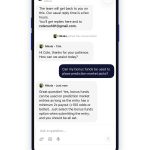
Underdog’s fine print and Underdog’s support desk didn’t agree.
The terms rule out bonus funds on Predict trades entirely; a support agent said otherwise, specifically once a pick cleared 2x.
One settlement source graded its own homework.
Across 16 sampled markets, a World Chess Championship contract listed “Underdog Predict” as its own settlement source — a real input behind the Market Coverage score.
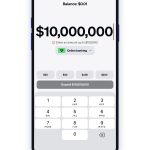
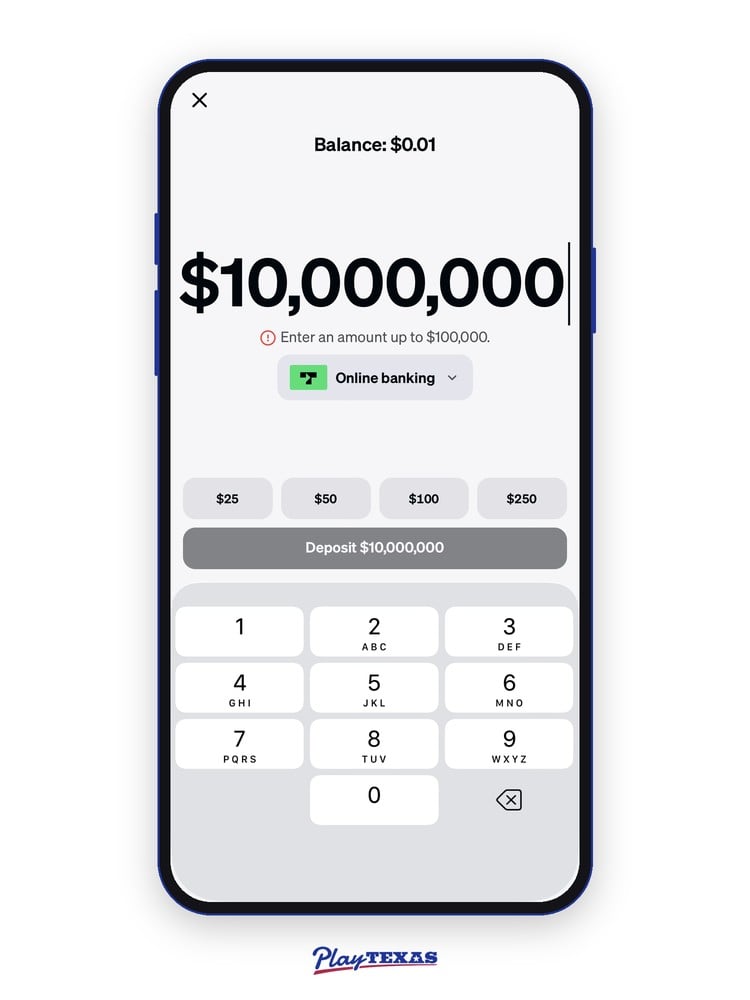
A deliberately oversized deposit test surfaced the real cap.
A $10,000,000 deposit attempt stopped cold at the platform’s actual $100,000 ceiling, far beyond anything the quick-pick buttons suggest.
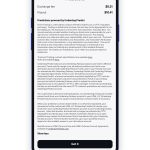
The order ticket, not the help center, had the real number.
A UDX-routed trade carried a $0.91 fee; a Kalshi-routed one carried $0.21 — both shown before the trade confirmed, above the help center’s published rate.
A packed market and a quiet one priced the same.
Round-trip cost landed at 3.3% on the busy side and 5.2% on the quiet one, with both filling right at the quoted number.
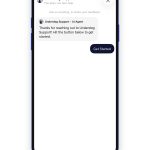
It took a human to close out a real question.
A chatbot circled a nuanced prompt without progress; a person stepped in minutes later with a specific, usable answer.
The headline offer, “Keep Your Million,” is free to play: a theoretical $1,000,000 pot spread across up to 20 picks, with whatever's left standing converting to real bonus funds. Where it's live, a 50% match on your first deposit (up to $1,000) runs alongside it — $10 gets you in, $2,000 maxes it out.
| Field | Detail |
| Welcome Offer | "Keep Your Million" — free-to-play, up to $1,000,000 in theoretical bonus funds |
| First-Deposit Match | 50% up to $1,000 ($10 minimum deposit; $2,000 to max out) |
| Playthrough Requirement | 1x within 14 days |
| Bonus Funds Usable on Predict? | Underdog's terms say no; testing and a support agent confirmed yes, on entries at 2x payout (+100 odds) or better |
A question lands on the screen, and a slider lets you split the theoretical pot across the two outcomes before the game starts. Whatever side wins carries forward to the next question automatically. Survive all 20 and the balance converts to usable bonus funds; miss one and the attempt is over.
Underdog's pitch leans entirely on that one big, gamified number. Polymarket skips a traditional welcome bonus altogether, leaning instead on low trading fees and the occasional activity-based reward tied to platform campaigns. For a Texas trader weighing the two, Underdog gives you something tangible on day one; Polymarket rewards someone who's already decided to trade there regularly and just wants lower costs along the way.
Six ongoing promotions were live during testing: a $10 Bonus Entry, a 40% league boost capped at $50, streak boosts, and a $250,000 Jackpot promo. The Bonus Entry took a four-pick slip's potential payout from $10 to about $70.90 in testing, and the league boost pushed a three-pick multiplier from 4.87x to 6.41x. A referral program adds up to $2,000 per friend — $10 per qualifying signup and entry, confirmed on Underdog's own help center, plus roughly a 1-in-1,000 shot at the full amount.

A genuinely deep promo slate undercut by real friction between what the terms say and what support confirms, on top of a headline bonus mechanically borrowed from Underdog’s fantasy product rather than built for Predict specifically.
Sports is the whole menu here — no elections, no economic indicators, no culture or crypto markets anywhere on the platform, despite what you might read elsewhere. That's a real ceiling against an exchange like Kalshi, and it's worth knowing before you expect a full prediction-markets spread.
| League | Live Markets |
| NFL | 700+ |
| NCAA Football | 600+ |
| WNBA | 500+ |
| MLB | 500+ |
| NHL | 500+ |
| Esports | 150+ |
| Tennis | 100+ |
| MMA/UFC | 100+ |
| NCAA Basketball | 80+ (off-season futures) |
| Soccer | 35+ |
| CFL | 30+ |
| NBA | 10+ |
| Motorsports | 10+ |
| Cricket | 10 |
| Chess | 9 |
| Golf | 4 |
| Boxing | 3 |
Fifteen of those leagues clear a five-market floor, which is the real cutoff between genuine coverage and a league that's listed for appearances only. For a Texas trader, that means solid depth on the Cowboys, Texans, Mavericks, Rockets, Spurs, Astros, Rangers, and every other NFL/NBA/MLB market in season — nothing, though, if what you actually want is a position on the next Fed decision or a midterm race.
With its focus locked on sports, Underdog Predict ends up closer in spirit to ProphetX than to a broad exchange like Kalshi or Polymarket — a narrower, deeper product rather than a wide one.
Take a hypothetical like “Will the Rangers cover the run line against the Astros tonight?” Every contract trades between $0.01 and $0.99, and that number doubles as the market's own implied probability — a contract sitting at $0.65 implies roughly 65% odds. Nothing here was actually tested; it's just how every real event contract on the platform behaves.
Each market names its settling exchange before you trade — UDX, Kalshi, or Crypto.com|Nadex — and that exchange's own rulebook decides the result. Testing sampled 16 markets and only 1 of 2 checked passed every independence test; the chess contract named above listed itself as the settlement source, which sits oddly next to Underdog's claim that it never determines its own outcomes.
Real depth where Underdog chooses to show up, undercut by a hard stop the moment a trader’s interest wanders outside sports, plus one disclosure gap worth knowing about going in.
Funding runs through ACH, a debit card, or a digital wallet — Apple Pay, Venmo, and Trustly all show up on the help center. A credit card can get money in, but it can't take money back out; every withdrawal routes to debit regardless of how you funded.
| Method | Deposit? | Withdraw? | Speed (tested) |
| ACH/bank transfer | Yes | Yes | Up to 72 hours (untested) |
| Debit/credit card | Yes | Debit only | Up to 48 hours (untested) |
| Digital wallet | Yes | Yes | 24 hours (tested) |
Both sides of the ledger open at $10, and the real ceiling — $100,000 — only turned up because testing deliberately pushed a deposit attempt past it. There's no platform fee in either direction; the only real cost sits on the order ticket itself, $0.91 on a UDX trade and $0.21 on a Kalshi one.
Doesn't matter which end of the state you're funding from — the rails behave the same: a $10 Venmo withdrawal cleared in 24 hours during testing, and winnings from a settled WNBA game landed in the withdrawable balance in under half an hour. One real mismatch turned up along the way: Underdog's terms exclude Venmo from funding Predict trades specifically, yet a Venmo deposit funded one seconds after it landed, with nothing in the flow actually blocking it.
Quick, transparent about its real costs, and consistent across every method tested — the only soft spot is a $10 minimum that feels high next to trades that start as low as $1.
There's no visible order book here — Underdog quotes a single price the instant you act, so the real question is whether that number holds once money actually moves. Here's a $10 position on each end of the activity spectrum:
| Market | 24h Volume | Exit Price | Round-Trip Cost |
| Karlbergs BK vs. Sollentuna FF (soccer) | ~$16,000 | $9.66, after 10 min | 3.3% |
| Valerion to win (esports) | ~$350 | $9.47, after 3 min | 5.2% |
Neither position slipped from its quoted price, and the Yes/No sides summed to roughly 100% on both markets, with no sign of a market-maker program artificially holding either side up.
Every contract resolves to $1 on a win, $0 on a loss. Profit is just contracts bought × ($1 − price paid) — 50 contracts at $0.60 apiece on a correct call nets $20 on $30 at risk. Nothing hidden in that math.
Real, predictable costs that held steady whether the market was packed or nearly dead — a solid result for a platform that doesn’t show visible order-book depth to check its pricing against.
Support boils down to two channels: live chat, in-app or on the web, and email at [email protected] — neither lists set hours anywhere on the site.
| Question | Result |
| A promo/bonus term | Correct and specific |
| A payout/withdrawal rule | Correct |
| A state eligibility detail | Correct |
| A Responsible Trading question | Vague, redirected to in-app tools |
| The dispute-process question | Correct, confirmed no dedicated process exists |
The chatbot handled the straightforward stuff fine, until the bonus-eligibility question came up and it just looped the same answer. Escalating to a human got a specific, confident reply inside 15 minutes. Email moved much slower — 13 hours passed before a separate question got a response.
The pattern here is familiar: automation that's fine for basic questions and useless the moment nuance enters the picture. What rescues the category is the human handoff — 15 minutes is a reasonable wait for an answer specific enough to actually act on, not a canned redirect.
The chatbot is the weak link, but the human who takes over isn’t — a short wait for a real, usable answer is a fair trade once you reach a person.
Everything lives in one app, Underdog Sports — 4.8 stars on the App Store across roughly 322,000 ratings, 4.6 stars on Google Play from about 33,900 reviews.
| Responsible Trading Tool | Present? |
| Deposit/funding limit | Yes, daily, weekly or monthly |
| Loss or exposure limit | No |
| Session/elapsed-time reminder | No |
| Cool-off/trading break | Yes, 3 days to 9 months |
| Self-exclusion | Yes, 1, 3, 5 or 10 years, or lifetime |
| Education/crisis-line signposting | Yes, 1-800-MY-RESET and NCPG |
| Age verification | Yes, 18+, enforced at signup |
No crashes or lag showed up on either platform across the full testing window, but mobile is clearly where Underdog wants you — geolocation resolves faster there, and the desktop site keeps steering you toward the app with a QR code. For a trader checking a line between innings at an Astros game, that mobile-first design is the whole point.
Money sitting in an open position never blends into what's actually withdrawable — the balance screen keeps withdrawable, non-withdrawable, and bonus funds in three clearly separate buckets. Closing the account down, though, isn't self-service; it takes a direct conversation with support.
Five of seven canonical responsible-trading tools are present and working — the gaps are a loss/exposure limit and a session-time reminder, both tools meant to interrupt mid-session rather than at setup. Two extras go beyond the standard checklist: Regen, which quietly redirects a share of wins and losses into savings, and a treatment-access partnership with Birches Health.
The parent company is Underdog Sports Holdings, Inc., but the entity actually holding trades is UDM, LLC — registered with the CFTC as a Futures Commission Merchant and NFA member under ID 0570265, a registration this review confirmed directly against the NFA's own BASIC lookup rather than taking Underdog's word for it. Which exchange clears a given contract depends on what's being traded: Aristotle Exchange DCM/DCO (“Underdog Exchange”/UDX), KalshiEX LLC, or Crypto.com Derivatives North America.
Predict funds sit under CFTC segregation, though that protection isn't permanent — money that moves into the Fantasy balance loses it the moment it lands there. Underdog's Legal Center makes no mention of SIPC or FDIC coverage, which settles the question of whether either applies. Separately, two real, ongoing stories are worth tracking: Underdog's pending acquisition by IG Group (announced July 30, 2026, roughly $1.3 billion, still awaiting regulatory clearance) and an August 2026 Aristotle Exchange lawsuit over that deal's terms. Neither is Texas-specific, but both could affect how the platform operates here eventually.
Texas has no legal regulated sportsbook of any kind, and unlike some states, that's not a story about voters rejecting a ballot measure — it's a story about the legislature. The Texas House has passed sports-betting bills more than once, only for them to die in the Senate every session, blocked by Lieutenant Governor Dan Patrick's refusal to bring a bill to the floor without enough committed Republican votes behind it. A bill died there again in the 2025 session, and Patrick's 2026 re-election bid makes near-term movement unlikely.
That gridlock is about a state-licensed sportsbook, though, and Underdog Predict isn't trying to be one. It operates under the same federal commodities-law framework described above, not Texas gambling law, which is why a legislative stalemate on sports betting doesn't actually block it. Worth noting separately: as of this writing, Texas hasn't joined the roughly two dozen states currently suing, issuing cease-and-desist orders, or defending lawsuits against prediction-market operators like Kalshi, nor the 38-state attorney-general coalition backing Massachusetts' case arguing event contracts amount to “illegal gambling by another name.” That could shift — this is a genuinely fast-moving area of law — but nothing at the state level currently stands in the way of a Texas trader using Underdog Predict the same way traders in most other states do.
AL, AK, AR, CA, CT, DE, DC, FL, GA, HI, ID, IA, IL, IN, KS, LA, ME, MN, MO, MT, NE, NH, NM, NC, ND, OK, OR, RI, SC, SD, TX, UT, VA, VT, WA, WI, WV, WY